
What exactly is a Kegel exercise?
A Kegel is a voluntary contraction of the pelvic floor muscles, followed by a complete release. These muscles close the pelvis from below and hold urine back when pressure spikes: a laugh, a cough, a sneeze, a grocery bag you lift.
When the pelvic floor weakens (pregnancy, childbirth, menopause, the passing years), the bladder loses support and leaks appear. Strengthening it goes after the cause, not just the symptom.
Finding the right muscles (the step everyone gets wrong)
Most people clench their buttocks, thighs or abs and think they are doing a Kegel. Two reliable cues:
- Imagine holding in gas in a crowded elevator: that squeeze-and-slight-lift feeling around the anus and vagina is the one.
- Once or twice only, try stopping your urine stream on the toilet, purely to locate the muscles, never as a regular exercise (see the FAQ).
The right movement feels like a squeeze followed by a lift inward and upward. Nothing should visibly move: not your glutes, not your abs, not your shoulders. And above all, keep breathing.
The technique, step by step
- Start lying down or seated, somewhere calm. Standing comes later.
- Empty your bladder before you begin.
- Contract the pelvic floor (squeeze + lift) for about 5 seconds, without holding your breath.
- Release completely for about 10 seconds (the release is part of the exercise).
- Repeat about ten times. Aim for two or three short sets a day.
- Add quick contractions (1 second squeezed, 2 seconds released) to train the reflex that catches a leak when you cough.
The beauty of Kegels? They cost nothing and can be done anywhere: in the car at a red light, in the grocery line, in front of the TV. Nobody can tell.
The common mistakes
- Holding your breath. Breathing stays smooth, otherwise abdominal pressure does the work, against you.
- Clenching glutes or thighs. If your buttocks lift off the chair, it is not a Kegel.
- Pushing down instead of lifting up, the exact opposite of the goal.
- Never releasing. A muscle that is always contracted exhausts itself and can become painful.
- Quitting after two weeks. Like the gym, results build over weeks of consistency.
When Kegels are not enough
Let's be honest: plenty of people cannot contract the pelvic floor correctly without guidance, and many others give up for lack of time or fast-enough results. Two resources exist, and they complement each other:
- Pelvic floor physiotherapy, the gold standard in Quebec for learning proper technique, with an individual assessment.
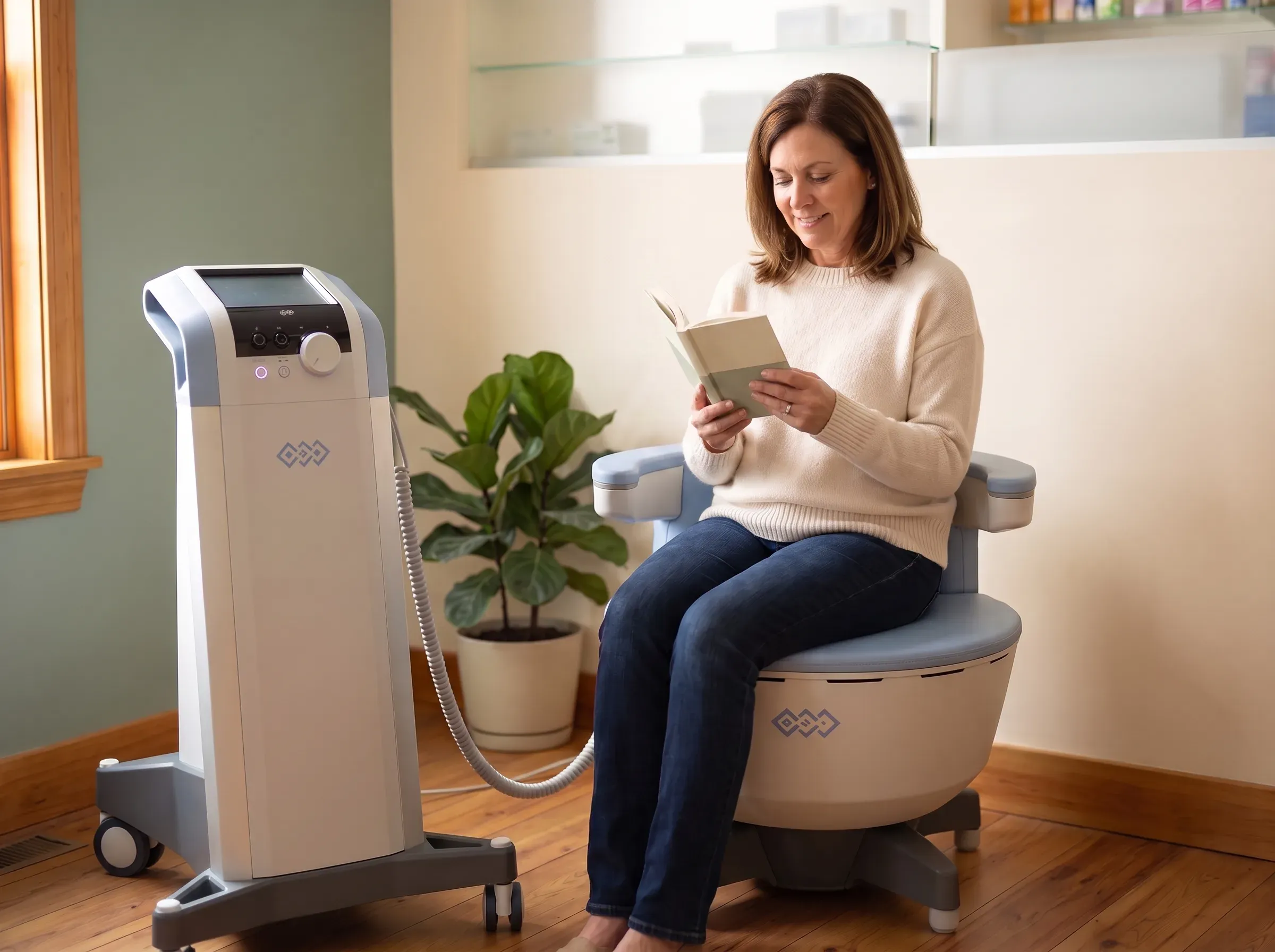
- Assisted strengthening (Emsella): the chair triggers the equivalent of about 11,200 pelvic floor contractions in 28 minutes, seated and fully clothed. The training happens with no voluntary effort, at an intensity no exercise can match.
Source for the "11,200" figure: BTL, manufacturer data.
The smart move: start the exercises today (they are free and safe for most people) and, if the leaks persist, say so out loud. The free consultation at the partner pharmacy is for exactly that: assessing where your pelvic floor stands and what would suit you best.