Recognizing an overactive bladder
An overactive bladder shows up as a frequent urge to urinate and sudden, hard-to-hold emergencies, sometimes with leaks (that is called urge incontinence). The classic signs:
- pressing urges that arrive without warning, even on a half-full bladder;
- urinating more than 8 times a day;
- waking at night to urinate, often more than once;
- leaks on the way to the bathroom: the key in the lock, the sound of running water.
Why the bladder acts up
In an overactive bladder, the bladder muscle contracts without permission, before the tank is full. Several things can encourage it: caffeine, alcohol and soft drinks, certain medications, the hormonal changes of menopause, excess weight, repeated urinary tract infections. There is also, paradoxically, the habit of going "just in case", which trains the bladder to sound the alarm earlier and earlier.
The pelvic floor plays a role too: weakened pelvic floor muscles control urges less well and hold back leaks less well when the urge wins.
What actually helps, day to day
- A bladder diary. For three days, note what you drink and every bathroom visit. It is the number one tool for understanding, and an excellent document to bring to a consultation.
- Bladder training. Gradually spacing out visits, a few minutes at a time, to teach the bladder to wait again.
- Cutting back on irritants. Coffee, tea, soft drinks, alcohol: no need to cut everything, just watch what triggers you.
- Strengthening the pelvic floor. Contracting the pelvic floor as an urge rises helps ride out the wave, and a trained pelvic floor does it better. Our guide to Kegel exercises shows how.
And where does Emsella fit in?
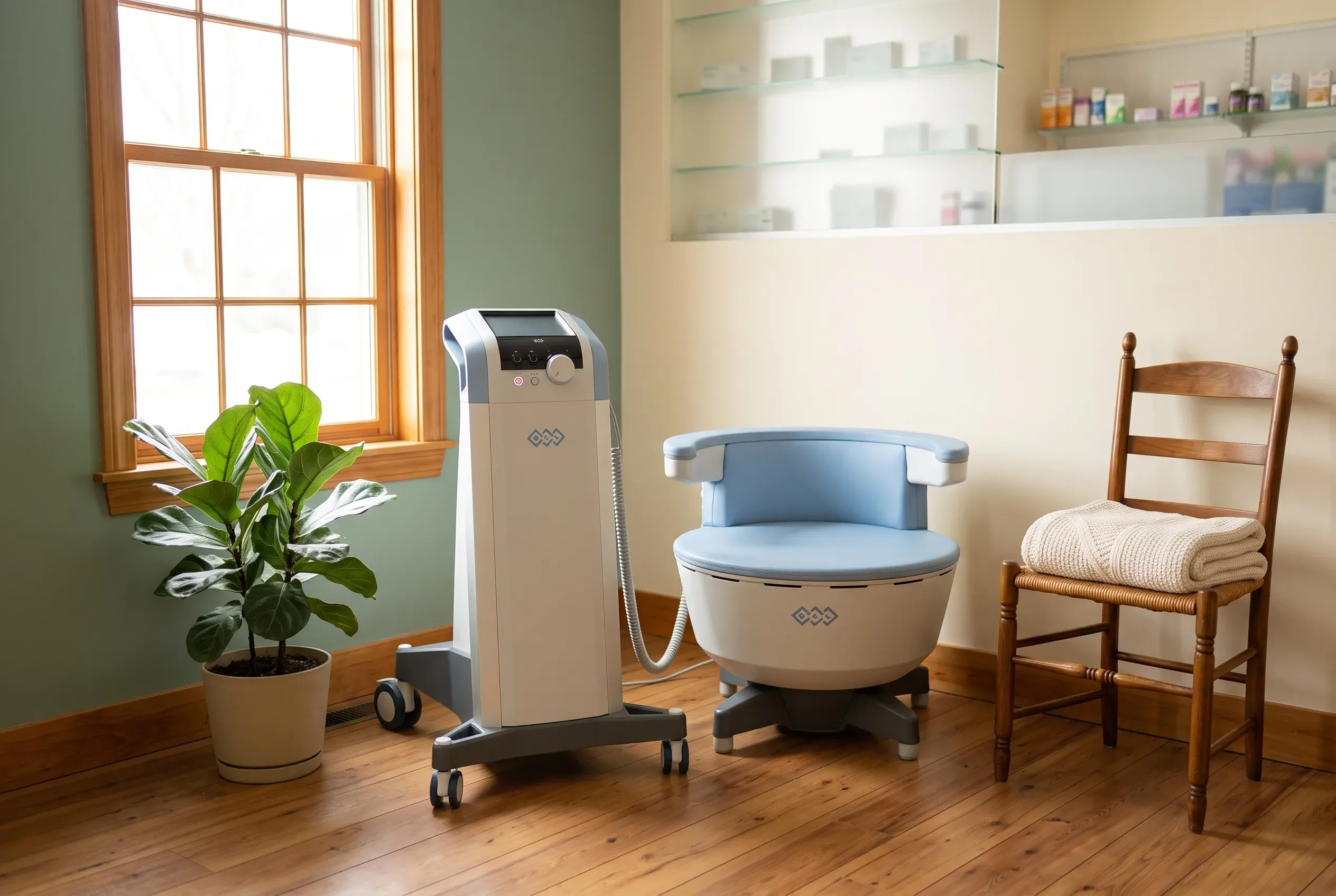
The Emsella chair trains the pelvic floor muscles deeply: the equivalent of about 11,200 contractions in 28 minutes, seated and fully clothed. For an overactive bladder, a more toned pelvic floor can help control urges and reduce the associated leaks. Studies suggest a benefit, but honesty requires saying it plainly: this is not the answer to every overactive bladder, and that is exactly what the partner pharmacy team assesses with you in a free, no-obligation consultation.